

Resources and Insights

Instructional Design and Structured Observation Training for Law Enforcement and Security
Picking out the right training is very important to protect yourself from liability and ensure that you are actually proficient at the skills that you are trained on. When it comes to developing effective training, using a formalized instructional design process is critical to ensure that training delivery methods are appropriate and make sense. At Second Sight, all of our advanced online training classes follow this process. In this post, we discuss the instructional design process and what it means for you when choosing courses for your personnel.

Police Tactical Units and Hotspot Policing
Police tactical units are increasingly being used to address violent crime and homicides, particularly in major cities. Many police tactical units use place-based policing strategies, such as hot spot policing and third-party policing, that focus on proactively targeting places where crime is highly concentrated. These strategies are data-driven and use information from past crimes to predict and prepare for potential future incidents.

Giving Back to the Community: Zone 5 Academy Training
Here at Second Sight, we enjoy giving back to our community. As part of this effort, we partner with the Zone 5 Police Training Academy in upstate New York to provide free training on active threat assessment. Our program is now a permanent part of their curriculum, and we’d like to share it with you too. In this post, we will discuss a bit more about the training and introduce you to our online version of the course.

School Behavioral Threat Assessment in Virginia: A Model Program
Violent acts on school property pose serious risks to our nation’s most vulnerable, presenting very real concerns for those tasked with keeping our schools safe. Many of these attacks are pre-planned and are often preceded by multiple warning signs. School behavioral threat assessment can help identify these warning signs so that necessary action can be taken to prevent tragedies from occurring. In this post, we describe the benefits of school behavioral threat assessment and will introduce you to an evidence-based model program that you can adapt for your jurisdiction.

School Threat Assessment and Identifying Active Threats
Lethal and non-lethal violent acts on school property are becoming more and more common, ranging from the most horrific shooting events to schoolyard fights. In this post, we will describe school threat assessment and the challenges associated with school safety. Also included are resources on critical topics. Lastly, we describe how active threat assessment and situational awareness training can help school personnel prevent violence.

Proactive Safety and Threat Recognition: A Structured Observation Framework
Are there training programs that focus on proactive safety and threat recognition for law enforcement and security professionals? We built our training around a structured, four-step observation process, not intuition or guesswork, that equips law enforcement, security, and safety professionals to recognize meaningful behavioral deviations and make defensible decisions before situations escalate.

Active Shooter Prevention: Understanding "Left of Boom"
Preventing a mass attack is an achievable goal. The FBI's 2025 data shows nearly 68% of active shooter incidents involved identifiable planning and preparation beforehand, and for the first time, the Bureau documented cases where observation and reporting likely prevented an attack. We explain "left of boom," and why structured, prevention-focused observation, not tactical response training, is what gives law enforcement, security, and workplace personnel the chance to intervene before an incident begins.

Police Response to Persons with Mental Illness
There are a number of police responses to persons with mental illness (PMI) that are designed to make encounters with them less dangerous for everyone involved. These include police and mental health collaborations and police-specific responses. In this post, we will describe these approaches as well as provide additional resources on the various approaches. We will also introduce active threat assessment, integration of this approach into police training can teach officers how to differentiate between threatening and non-threatening individuals and situations

Police Tactical Units and Offender-Focused Policing
Police tactical units are being increasingly used to address violent crime and homicides in the United States. There are a variety of police tactical units that target specific places and people, ideally so that officers can focus on the most dangerous individuals. Some strategies are proactive and can enhance an officer’s awareness regarding a certain place or person in advance, while other strategies help an officer assess a situation in real-time. Active threat assessment training is one way to enhance police tactical units, as it can be integrated as an additional layer of officer decision-making in terms of focusing on the most dangerous offenders.

De-escalation Techniques for LE-Citizen Encounters
The concept of ‘de-escalation’ is becoming more prominent among law enforcement professionals, but the term still means different things to different people. Generally, de-escalation techniques focus on reducing the immediacy of threat in potentially volatile encounters, ideally so that officers can resolve incidents without using force. However, it can sometimes be difficult to know when it is appropriate to de-escalate versus when doing so might be unsafe. Thankfully, threat assessment and other techniques can be utilized to help an officer estimate the risk to his safety. This post outlines the common de-escalation techniques used in law enforcement today and what we know about them.

Structured Observation in Action: Identifying a Concealed Weapon at a Protest
One of our trainees, monitoring a camera feed at a protest of 300 to 400 people, picked out a single individual whose posture, clothing, and movement didn't fit the crowd around him, and it led to a confirmed handgun. We walk through exactly how that cluster of behaviors was read in real time, and why the same skill applies just as directly to a hospital security desk, a school hallway camera, or a corporate operations center.
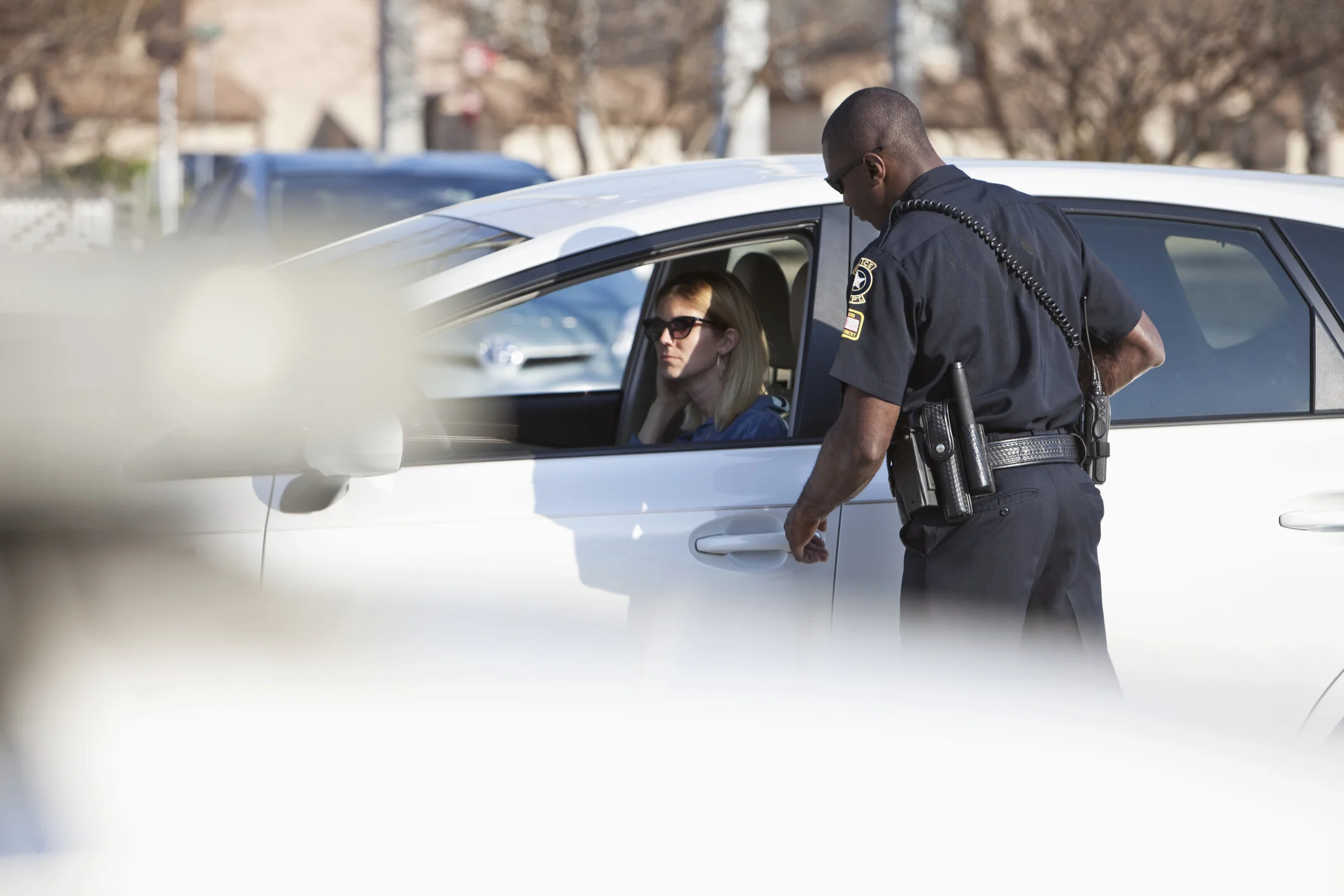
Before Defensive Tactics: 5 Training Approaches for LE-Citizen Encounters (Part II)
There are a number of training approaches recommended to heal police-community tensions, including procedural justice, implicit bias, de-escalation, and CIT. These approaches involve assessment, decision-making, and communication. In the second of this two-part series, we focus on de-escalation and crisis intervention training.

An ASIS International Preferred Provider
Second Sight Training Systems is excited to announce that we have been approved as a Preferred Provider by ASIS International. ASIS certified security professionals can to use our courses to meet continuing education requirements for the APP, CPP, PCI, and PSP Security Certifications.

Before Defensive Tactics: 5 Training Approaches for LE-Citizen Encounters (Part I)
There are a number of training approaches recommended to heal police-community tensions, including procedural justice, implicit bias, de-escalation, and CIT. These approaches involve assessment, decision-making, and communication. In the first of this two-part series, we focus on procedural justice and implicit bias training.

The Who and Why of Personal Safety Awareness Training
Situational awareness is a key ingredient to keeping you safe. Learn more about the how and the why of personal safety awareness training. Limit your opportunity to be a victim.

An Interview with the Managing Violence Podcast
In this interview on the Managing Violence podcast, Joe Saunders and Nathan Meehan discuss the origin of active threat assessment, systematic observation, and ways of identifying potential threats.

About Situational Awareness - Second Sight on Applied Science Live
Check out a podcast interview with Second Sight’s Director of R&D about the application of research to practice and our new Situational Awareness for Safety Program.

A Guide to the Provision of Law Enforcement & Security Services During the Covid-19 Pandemic
In this guide, we will describe potential effects and mitigation strategies for law enforcement and security organizations dealing with the COVID-19 pandemic.